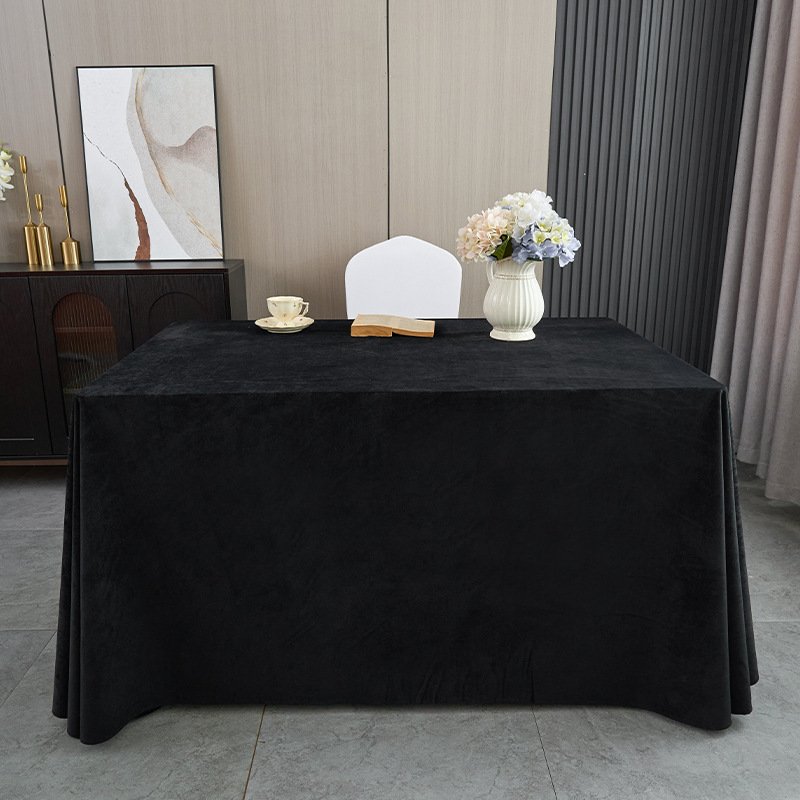
Is Velvet Tablecloth a Good Choice for the U.S. Market?
Velvet and velour tablecloths look luxurious and dramatic on any dining or event table.
But for exporters and wholesalers, a key question is: Does velvet really have stable demand in the U.S. market?
In this article, we analyze the advantages, risks, target customers, and development tips for
velvet tablecloths, so you can position this fabric as a profitable premium line instead of a slow-moving inventory.
Advantages of Velvet Tablecloths for U.S. Buyers
-
Luxurious visual effect: Velvet offers a rich, soft sheen that instantly upgrades the table
setting for weddings, holiday dinners, and upscale events.
-
Strong seasonal appeal: Ideal for fall and winter, especially during
Thanksgiving, Christmas, and New Year celebrations.
-
Excellent for premium positioning: A velvet line helps your brand or collection stand out
from basic polyester or PVC tablecloths.
-
Higher perceived value: Buyers are more willing to pay a higher price per piece for velvet,
which can improve your overall margin.
Risks and Challenges of Velvet Tablecloths
-
Heavier weight and higher freight cost: Velvet fabrics are thicker and heavier than common
polyester or cotton blends. This increases shipping cost per piece for export.
-
More demanding care instructions: Many U.S. consumers prefer
machine-washable and low-maintenance textiles. Velvet may require more gentle handling to avoid
flattening, marks, or color fading.
-
Not a year-round bestseller: Sales are often concentrated in Q4 and special occasions; demand
may slow down in spring and summer.
-
Higher material cost: Compared with standard polyester, velvet usually has a higher fabric
cost and requires careful stock planning.
Who Are the Right Target Customers for Velvet Tablecloths?
Velvet tablecloths are not for everyone, but they are very attractive to certain segments:
- Event planners and wedding decorators who create high-impact visual setups.
- Rental companies that provide premium linens for banquets and galas.
- Boutique restaurants and wine bars looking for a unique seasonal look.
- Home décor enthusiasts who upgrade their homes for Christmas and special dinners.
Recommended Sizes for Velvet Tablecloth Development
Because velvet is heavier and more expensive, a focused size range is better than a very wide one.
We recommend:
- 60" round: suitable for classic 4–6 seater round tables in homes and restaurants.
- 70" round: gives a more generous drop and works well for seasonal home décor.
- 90" round: ideal for events and small banquet tables.
- 108" / 120" round: premium floor-length options for formal weddings and banquets.
Best-Selling Velvet Colors for the U.S. Market
A small but well-planned color palette is usually enough:
- Deep red / burgundy – classic for Christmas and romantic dinners.
- Emerald green – elegant and festive for winter seasons.
- Navy blue – versatile, suitable for both events and restaurants.
- Champagne / gold – luxury highlight for weddings and special occasions.
- Charcoal or black – dramatic, modern, and easy to decorate on.
How to Position and Price Velvet Tablecloths
Instead of treating velvet as a basic commodity, present it as a premium add-on line:
-
Combine velvet tablecloths with standard polyester ranges, allowing buyers to upgrade part of their
assortment without taking too much risk.
-
Highlight seasonal sales opportunities, especially Q4 holiday promotions and wedding seasons.
-
Offer higher MOQs per color but fewer total colors to keep fabric purchasing efficient.
-
Provide clear care instructions (gentle wash, low heat, avoid high-friction drying) to reduce claims and returns.
Conclusion: When Does Velvet Make Sense for Your Business?
Velvet tablecloths are not meant to replace basic polyester lines, but they are a powerful tool
to:
- Target higher-value customers in events and hospitality.
- Increase the average order value through premium collections.
- Differentiate your offer from low-cost competitors.
If your buyers work with weddings, rentals, boutique restaurants, or seasonal home décor, a
carefully designed velvet series can be a profitable addition to your catalog.